 uprise
For clothing brands
Facebook ads for clothing brands, from an account running right now
No theory. Everything on this page comes from ad accounts I run, with the real numbers attached. Start with the math, then the creative, then the page.

1. Know your break-even ROAS before you spend. 2. Run 5 to 10 ads on one hero product, each a different reason to buy. 3. Don't touch the campaign for 7 days, then scale 20% at a time. 4. Fix the product page before adding budget.
Break-even ROAS calculator
This is the number most brands never check. Below it, every sale loses money, even when Ads Manager looks good.
Your product
Formula: break-even ROAS = price ÷ (price − cost to make − shipping − payment fees). The default example is a $45 hoodie: 45 ÷ 19.40 = 2.32x.
The videos
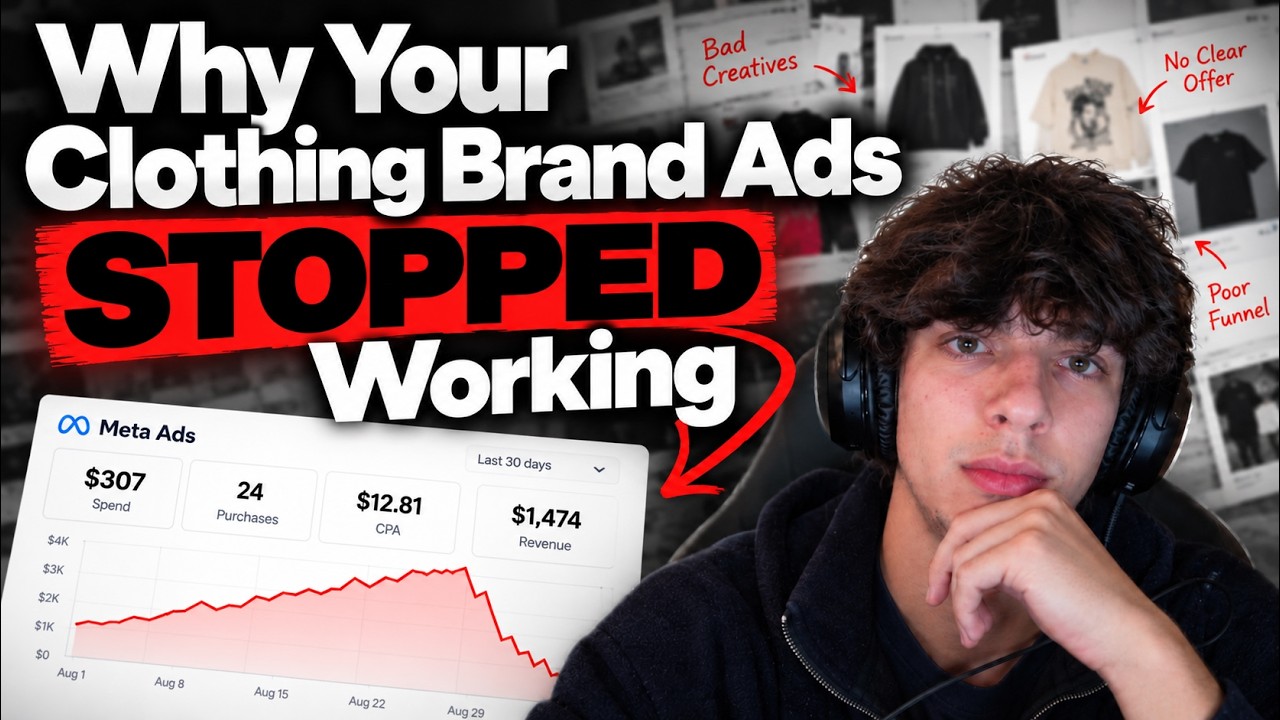
Creative fatigue, too few ads, touching campaigns, margins, and the product page. How to tell which one is yours.
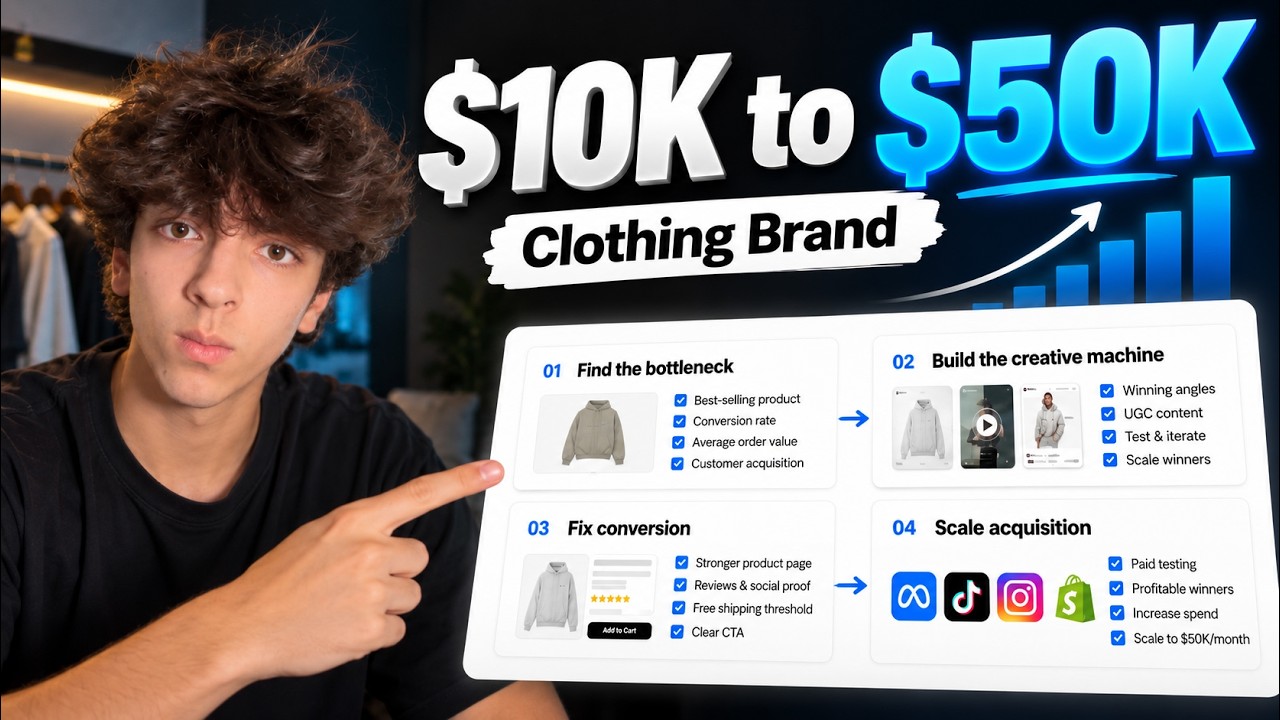
Bottleneck, creative machine, conversion, acquisition, lifetime value. In that order.
A $67 product launched on Meta from zero: $13.25 per purchase by Meta's count, every day and every ad shown.
How many ads to run
Five to ten per hero product, each one a different reason to buy. Meta finds buyers through the creative, so five reasons reach five kinds of buyer. Five captions on one video is still one reason.
| Format | The reason to buy it answers |
|---|---|
| Try-on | "How will it fit me?" The top reason people don't buy clothes online. |
| Drop countdown | "Why now?" Limited drops give a deadline. |
| Founder story | "Who's behind this?" Builds the brand people come back to. |
| Customer reactions | "Is it actually good?" Real people, real reviews. |
| Quality close-ups | "Is this cheap?" Fabric, stitching, weight. |
Budget and the learning phase
- Start where you get purchases most days. The case study account started at $25 a day.
- Meta's learning phase looks for about 50 conversions in 7 days. Edits push it back.
- Never judge on three days. In week one of the case study, cost per purchase jumped from $6.68 to $23.76 overnight and the account kept selling.
- Scale 20% at a time. Bigger jumps reset learning.
- Never edit a winner. Add new ads next to it.
Tracking: pixel plus Conversions API
Pixel-only setups miss buyers on iPhone, inside the Instagram browser, and with ad blockers. Then Meta optimizes on half the data. Send purchases from your server too, with the same event ID as the pixel, so each sale counts once. In the case study, the very first sale only showed up in Ads Manager because the server sent it.
Product page checklist (on your phone)
- Loads in under 3 seconds
- Photos on a real person
- Size chart right under the price
- Shipping cost shown early
- Add to cart without scrolling
- Reviews and customer photos below the product
- A free shipping threshold or bundle offer
Questions
Do Facebook ads still work for small clothing brands?
Yes, when the margins clear break-even and the creative gives real reasons to buy. Small brands usually lose on margin math or on running one ad, not on Meta.
Facebook ads or Instagram ads?
Same campaign, both placements. Let Meta place across Facebook, Instagram feed, Stories, and Reels. Native-looking vertical video usually wins.
Should I boost posts?
No. Boosting optimizes for engagement, not purchases. Run a Sales campaign optimized for the Purchase event.
Who writes this?
Rio Costa, founder of Uprise Growth in Miami. I build and run the ad accounts myself, and I post the breakdowns on YouTube.
Want me to look at your brand?
Pick a time. I'll pull up your store and tell you what's holding your ads back and what I'd run first.
Calendar not loading? Open it here.