 uprise
For clothing brands · 12 min video
When to start running Meta ads for your clothing brand (before you waste $3,000)
Most brands start ads way too early or way too late. They put $3,000 in, get a handful of sales, and decide ads don't work. Ads work. The brand just wasn't ready. Here's how to know when yours is.

Start when all five are true: 1. people already buy without ads, 2. your margins leave room to pay for a customer, 3. you can ship more orders, 4. your product page converts on a phone, 5. you capture the people who don't buy (email and SMS). Then run one real test and let the numbers decide the next move.
Watch on YouTube: youtube.com/@rioscaled
- Too early or too late?
- Prove people actually want it
- What real demand looks like
- Do the math first
- Is your website ready?
- Capture the people who don't buy
- Your first $3,000 test
- Read what the test tells you
- The numbers to track
- Recap
- Book a call
1. Prove people actually want it
Running Meta ads just pours more fuel on what's already working. If nothing is selling organically, ads won't fix that. They'll just help you lose money faster.
Real demand isn't one viral video. It looks like this:
- Consistent orders, not one spike
- You can name your best-selling product
- People buy without a discount
- Real customer interest and good feedback
- Enough inventory, and the ability to restock
Two more questions before you spend anything. Can you afford to acquire customers? Ads are a risk you take on your brand, so go in with a budget you can actually lose while you learn. If you don't have it yet, keep building organic and try affiliates first. Can you fulfill more orders? If ads bring 100 or 200 orders and you can't ship them, it hurts the brand more than it helps.
2. Do the math first
It sounds boring. It's the part that decides whether ads can ever work for you. Take an example order (illustrative numbers):
| Average order value | $80 |
| Product + fulfillment | −$30 |
| Payment + other fees | −$5 |
| Left before ads and profit | $45 |
That $45 has to cover what it costs to get the customer, any agency fee, and your profit. Spend all $45 to win the customer and nothing is left, so you lose money on the first order.
Max sustainable cost per customer = average order value − variable costs − agency fee − the profit you want to keep. In the example, break-even ROAS is $80 ÷ $45 = 1.78x, and anything above it is room for profit. Run your own numbers in the break-even calculator.
3. Make sure the website can convert
Paid traffic is cold traffic. Sending it to a page that doesn't convert just burns money. Before you spend, check:
- Clean product photos, on body, in every color
- Trust and proof: reviews, customer photos, tagged posts
- Something that raises the order value (a bundle or a second item)
- A size chart, plus a free size exchange so a unique fit isn't a risk to buy
- Fast mobile checkout with one-tap pay. Most buyers come from Instagram on a phone.
- Shipping, returns and exchanges spelled out clearly
- Tracking set up (pixel plus Conversions API) so Meta learns from real purchases
Conversion rate multiplies every ad dollar. 1,000 visitors at 1% is 10 orders. At 2% it's 20 orders, on the same spend.
4. Capture the people who don't buy
Lots of people will start checkout and close the tab. They're not lost customers. They're your highest-intent buyers. Catch them:
- A sign-up offer: a pop-up, a waitlist, or drop alerts
- A welcome flow (email and SMS) with the brand story, best sellers and reviews
- Abandoned cart and checkout texts and emails to people who almost bought
- Drop day: text the list first. People open texts. Run email too, so you reach them both ways.
Ads bring people in. Email and SMS bring them back for free.
5. Your first $3,000 test
$3,000 is an example, roughly $100 a day for 30 days. The setup:
- One campaign, one broad ad set
- Different ad types: a product ad, a fit ad, a proof ad
- Formats that already worked in your organic content and match the brand, plus a few new ones you haven't tested
- Each ad gives a different reason to buy. Not one ad with five captions.
The goal of the first test isn't profit on day one. It's finding what works, getting the first sales, building audiences to retarget, and learning what to push in your organic content too.
6. Read what the test tells you
| What happened | What to do |
|---|---|
| Profitable and consistent | Raise spend gradually, about 20% at a time |
| Engagement, but few purchases | Check the offer, the tracking and the product page |
| Purchases, but too expensive | Review creative angles, the math, product fit and trust |
| Not enough data yet | Don't change anything. Let it run. |
The numbers that tell you which one you're in: cost per purchase (customer acquisition cost), average order value, website conversion rate, contribution margin, purchase volume, and Meta-attributed revenue and ROAS. After the test you either scale, iterate on creative, or fix the foundation.
Questions
Is my brand too small to run ads?
Size isn't the test. Readiness is: organic sales, margins that leave room, and a page that converts. A small brand that checks those boxes is ready. A big one that doesn't isn't.
Can I start with less than $3,000?
Yes, but results take longer to read and you'll test fewer ads. If the budget isn't there, put the time into organic content, affiliates and building your email and SMS list first.
My first test got likes but no sales. Do ads not work for me?
Engagement without purchases points at the offer, the tracking or the page, not at ads in general. Fix those, then test again.
Keep going
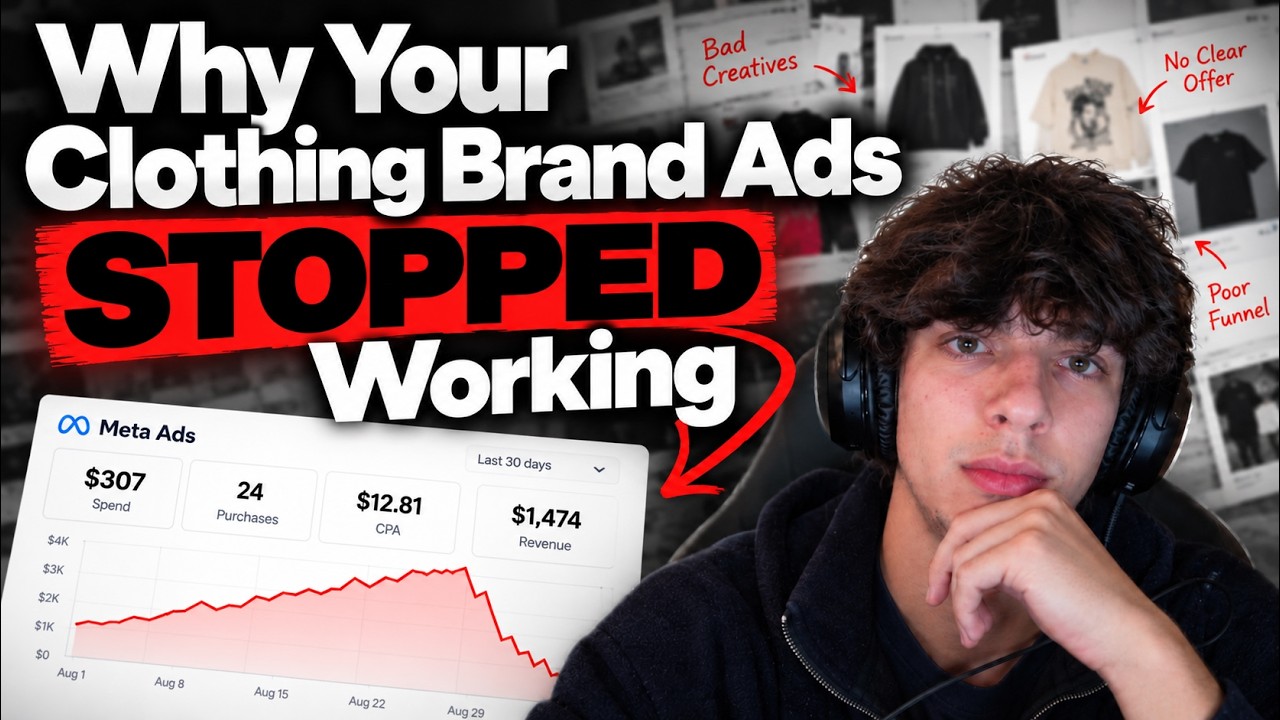
Already running ads and results dropped? It's one of five things.
A live account, day by day and ad by ad.
Not sure if you're ready?
Pick a time. I'll pull up your store and tell you if you're ready for ads, and what I'd fix first if you're not.
Calendar not loading? Open it here.